Place-names are not always what they seem! This story provides a salutary reminder of that by tracing the contrasting origins of three apparently similar names from Scotland, England and Polynesia.
A tale of three Easters
Easterhouse
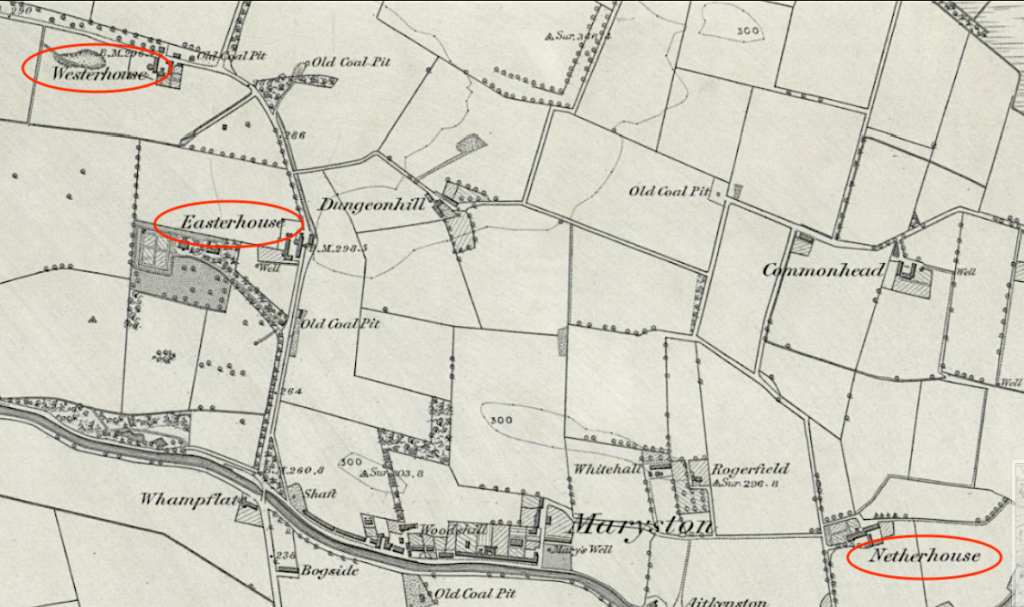
The village of Easterhouse in central Scotland was named from a farm meaning ‘eastern house’, to differentiate it from another farm, Westerhouse (‘western house’). Easterhouse and Westerhouse are shown on the Ordnance Survey Six inch to One Mile map of 1864 below. As you’ll see, compass directions are used rather loosely in place-names. Easterhouse has now become a suburb of Glasgow, where Westerhouse and a third farm-name, Netherhouse, are the names of local streets.
The Scots and early English adjective easter ‘eastern, more easterly’ goes back to the Old English ēastera ‘east, eastern’. The adjective easter is found widely in place-names but especially in Scotland.
Good Easter
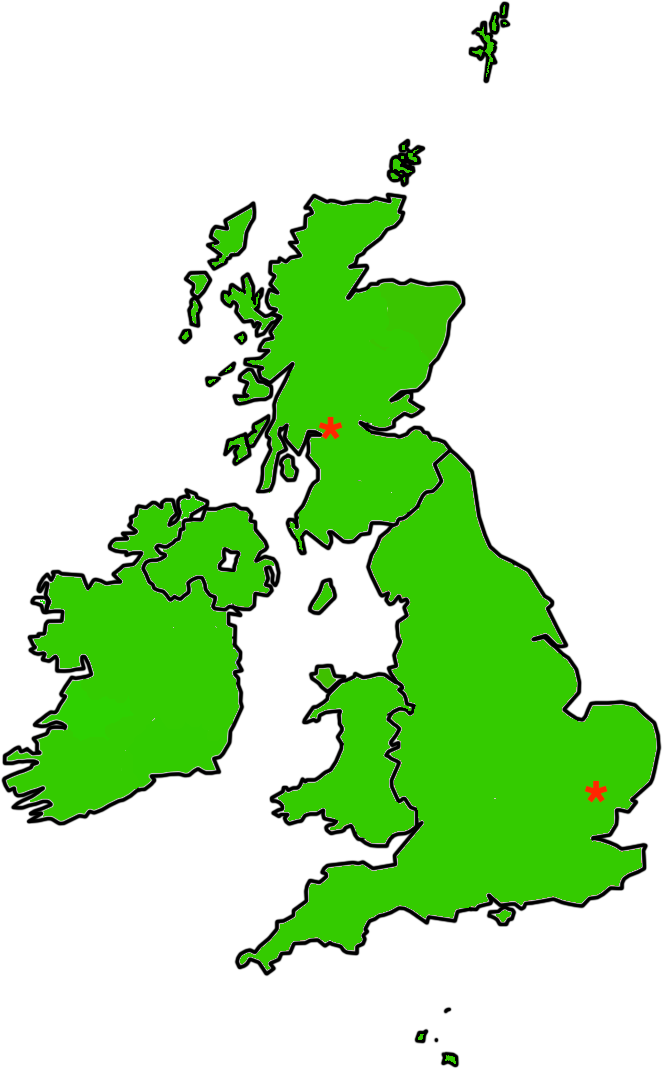
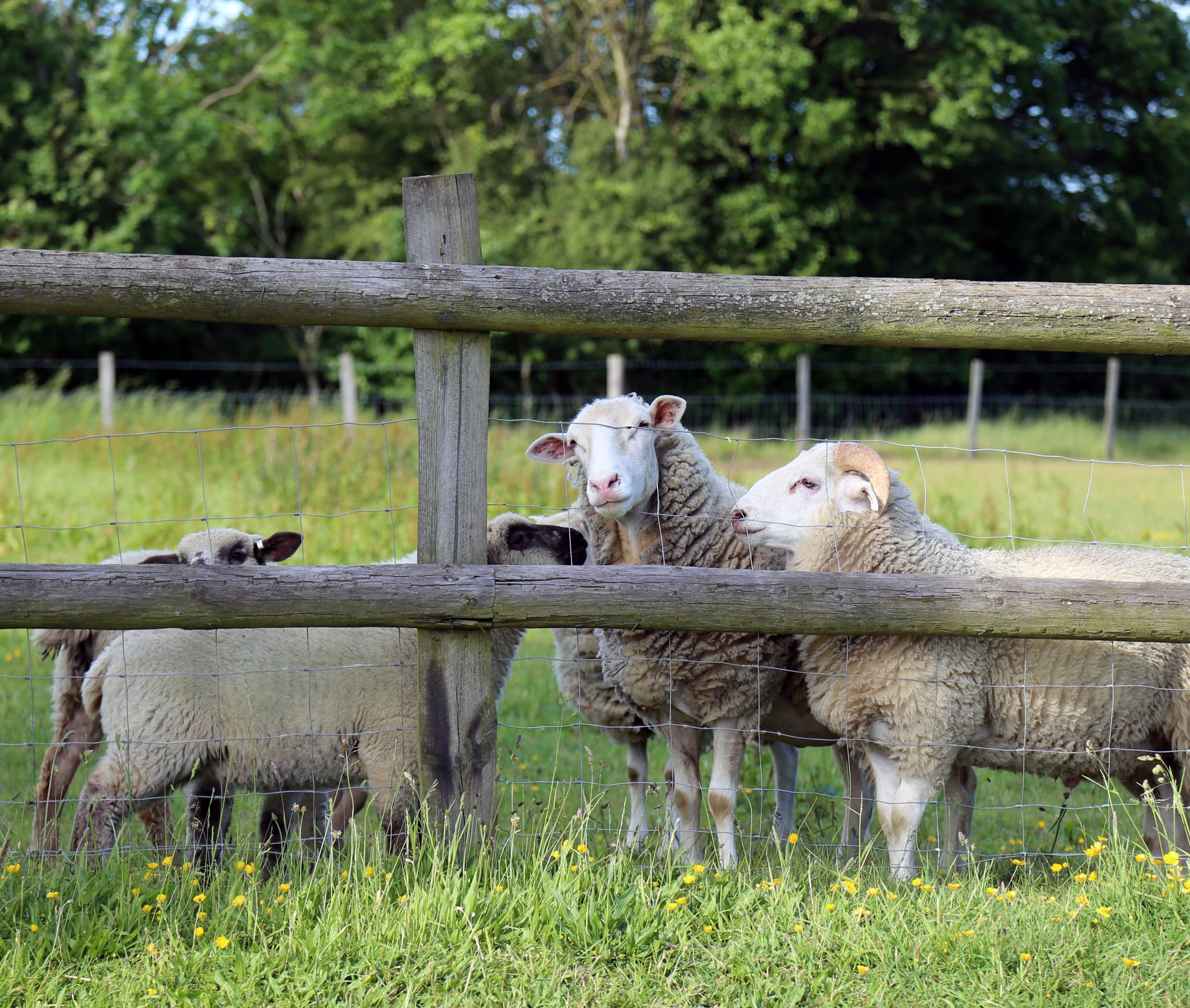
Moving to southern England, the adjacent villages of Good Easter and High Easter in Essex, both close to the River Can, were first recorded in Domesday Book (1086) as Æstre. High Easter lies upstream of Good Easter and on slightly higher ground, while ‘Good’ is from the name of an eleventh-century owner, a woman called Godgiefu. Here the place-name Easter derives from an Old English word eowestre meaning ‘sheepfold’, which is related to the Present-Day English word ewe.


Easter Island
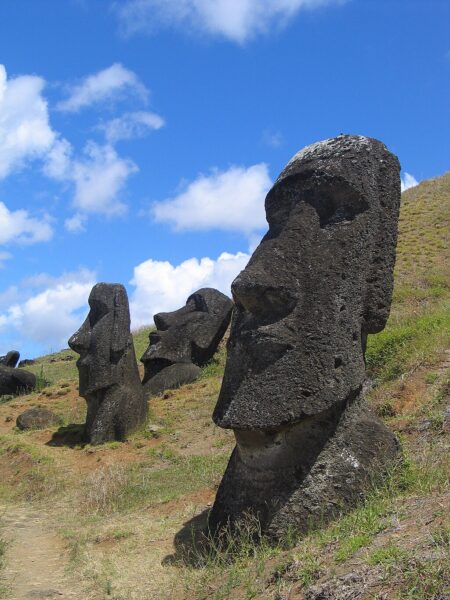
So are there no ‘Easter’ place-names that refer to the Christian festival? Yes! Easter Island in the Pacific was named by the Dutch explorer Jakob Roggeveen, who arrived there on Easter Day 1772. The local Polynesian names are Rapa Nui (also the name of the language) and Mata-kite-ran meaning ‘eyes that watch the stars’, referring to the monumental statues known as moai for which the island is famous.
Selected sources
Everett-Heath, John (2005), The Concise Dictionary of World Place-Names, p. 148.
Reaney, P. H. (1935), The Place-Names of Essex, pp. 478–79.
Text © Carole Hough 2023