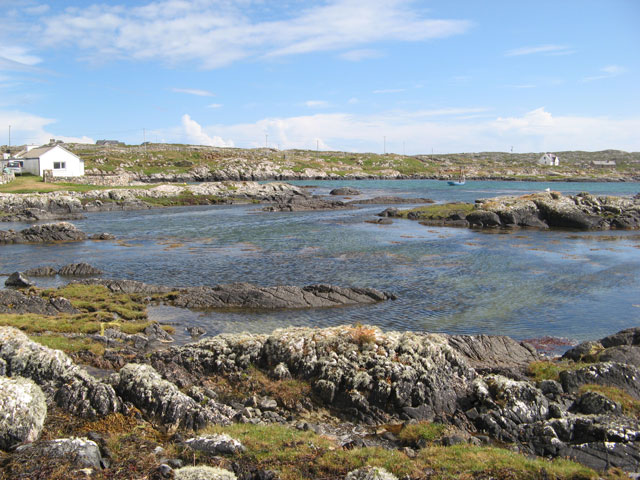
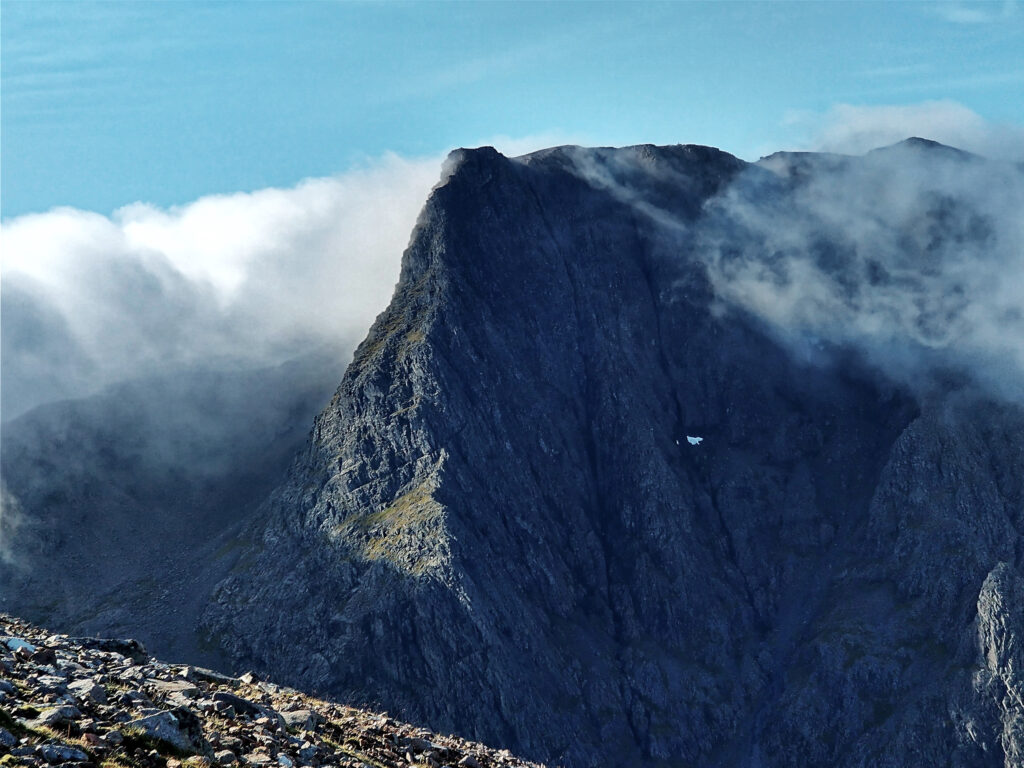
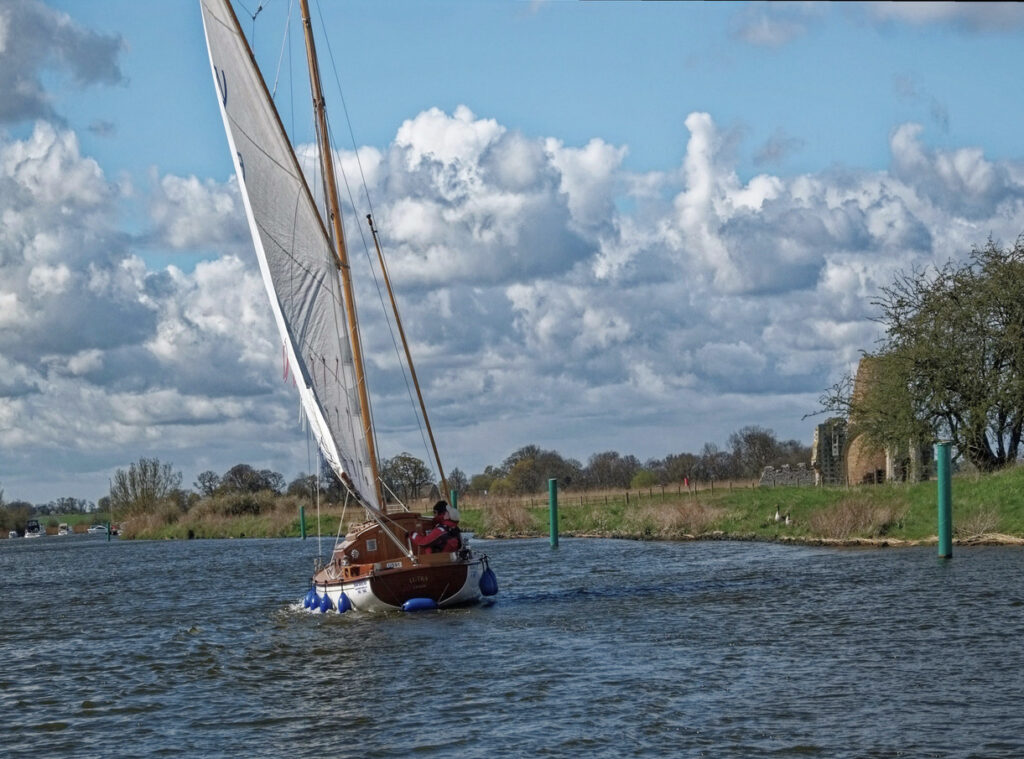
The diverse landscapes have offered very different possibilities for land use and settlement by humans, especially arable farming, stock-rearing, fishing, and the exploitation of woodland resources; not to mention trade, mining and industry. Humans have also created routeways through the land, worshipped their gods, organised themselves, and built defences against their neighbours or attacks from outside, always with a strong sense of place. This rich variety of landscapes and human uses of them is registered — even celebrated — in place-names.
Of the names mentioned above, all four happen to underline the importance of rivers and coastal features. Aberdeen is the aber or mouth of the River Don, and like its neighbour the Dee (and the Dee at Chester), Don is believed to be an early river-name whose root refers to a divine being of some kind. Galway is from Gaelic gaillimh ‘stony’ (referring to a river), and Zone Point contains a Cornish word sawn ‘a cleft or gully’ as well as modern English point ‘headland’. Norwich is the wīc to the north and, while Old English wīc can be a specialised place of various sorts, a trading centre seems very likely in Norwich, where a market developed at a site that could be reached both by river and overland routes.
Other themes run right through the names of Britain and Ireland, whatever their language of origin. Early defensive sites in Ireland, for instance, are often signalled in names in rath such as Rathgar (Dublin) and several Rathmores, and other former forts or strongholds are identified by dinas names in Wales such as Dinas Powys, by dun names such as Dunbar and Dundee in Scotland, and by numerous names from Old English burh in England, among them Bury, Middlesbrough and Salisbury. The word castle became widespread in English-language place-names through the influence of those zealous castle-builders, the Normans, and can be seen in names like Newcastle and Barnard Castle. River-crossings were similarly vital in the past and still are today, and many different words are used to refer to them in place-names. They can be spotted on the map through names containing ford or bridge in English-speaking areas, as in the names Oxford and Cambridge, or rhyd ‘ford’ or pont ‘bridge’, as in Rhydowen or Pontypridd, in Welsh-speaking areas. In Gaelic-speaking areas, (Irish) áth ‘ford’ is found in the name of the Irish capital city, Baile Átha Cliath (‘town of the hurdle ford’; Dublin), and (Scottish Gaelic) drochaid ‘bridge’ in names like Druim na Drochaid (Drumnadrochit) in Scotland.
Diverse peoples, languages and histories
People of many different origins have been attracted to these islands over many millennia, coming in peace or war, hope or desperation, and they have left a legacy of place-names formed out of many languages. The place-names of Scotland alone are formed from an exceptional range of languages, but the name-stock of England, Ireland and Wales is wonderfully diverse too. The languages we can trace have been spoken at various times and places between the first millennium BC, when names such as Thames and London came into being, and today, when new naming is mainly of smaller features such as housing estates or shopping malls. The languages concerned belong to diverse language groups: mainly Celtic, Germanic and Romance, while a few extremely ancient names are thought to belong to an ‘Old European’ stratum or an even older one. (For more detail see our section on Languages.)
Even discounting some modern place-name forms as misleading, the range of languages can be seen from the modern map by looking at common ways of referring to settlements. Among common Celtic terms for settlements, Gaelic baile (which we saw earlier in Baile Átha Cliath) is very frequent in names of towns and villages in Ireland (often anglicized as bally) and Scotland (often bal), while tref or tre, a word belonging to the other, Brittonic, branch of Celtic, is characteristic of Wales and Cornwall. Old English tūn (modern -ton) ‘farmstead, village, estate’ is common throughout England, Lowland Scotland and Wales, and bý ‘farmstead, village’ is widely used in areas settled by Scandinavian speakers. Terms for ‘church’ show a similar variety: cill in the Gaelic-speaking world, llan- (also meaning ‘enclosure’) in Wales, while the Scandinavian-type form kirk is found in parts of Scotland and northern and eastern England, and church in the rest of England. Place-names coined by speakers of Latin and French are relatively few, but Latin ‘donated’ words such as strāta ‘street’ and castra ‘fort’ that were used in place-names such as Street, Stratford, Chester and Manchester, and similarly words of French origin such as grange, park or ville appear widely on maps of Britain and Ireland.
Want to find out more?
See our Introducing the place-names of England and Introducing the place-names of Scotland, and similar introductions for Ireland and Wales are in preparation. In addition to the Selected sources listed below and the wide-range of material on place-names listed on Reading suggestions, the Ordnance Survey has useful introductions to the Welsh origins of place-names in Britain and the Gaelic, Scandinavian and Scots origins of place-names in Scotland. Some useful landscape photographs illustrating the meaning of topographical place-names elements are at Gelling-Cole photographs.
Selected Sources
Ainmean Àite na h-Alba (Gaelic Place-Names of Scotland) (in progress)
Cameron, Kenneth (1996), English Place-Names.
Ekwall, Eilert (1960), The Concise Oxford Dictionary of English Place-Names, 4th edn.
Flanagan, Deirdre and Laurence Flanagan (1994), Irish Place-Names.
Gelling, Margaret (1997), Signposts to the Past: Place-Names and the History of England. 3rd edn.
Gelling, Margaret and Ann Cole (2014), The Landscape of Place-Names. 2nd edn.
Key to English Place-Names
Logainm.ie. Placenames database of Ireland (in progress)
McKay, Patrick (1999), A Dictionary of Ulster Place-Names.
Mills, A. D. (2011), The Oxford Dictionary of British Place-Names.
Nicolaisen, W. F. H. (2001), Scottish Place-Names. Revised edn.
Ó Riain, Pádraig and others (2003–20), Historical Dictionary of Gaelic Placenames, A–Duthaire (in progress)
Owen, Hywel Wyn and Richard Morgan (2007), Dictionary of the Place-Names of Wales.
Padel, Oliver J. (1988), A Popular Dictionary of Cornish Place-Names.
Taylor, Simon (2012), The Place-Names of Fife, vol. 5.
Watts, Victor (2004), The Cambridge Dictionary of English Place-Names.
© Diana Whaley 2024