A long and winding history
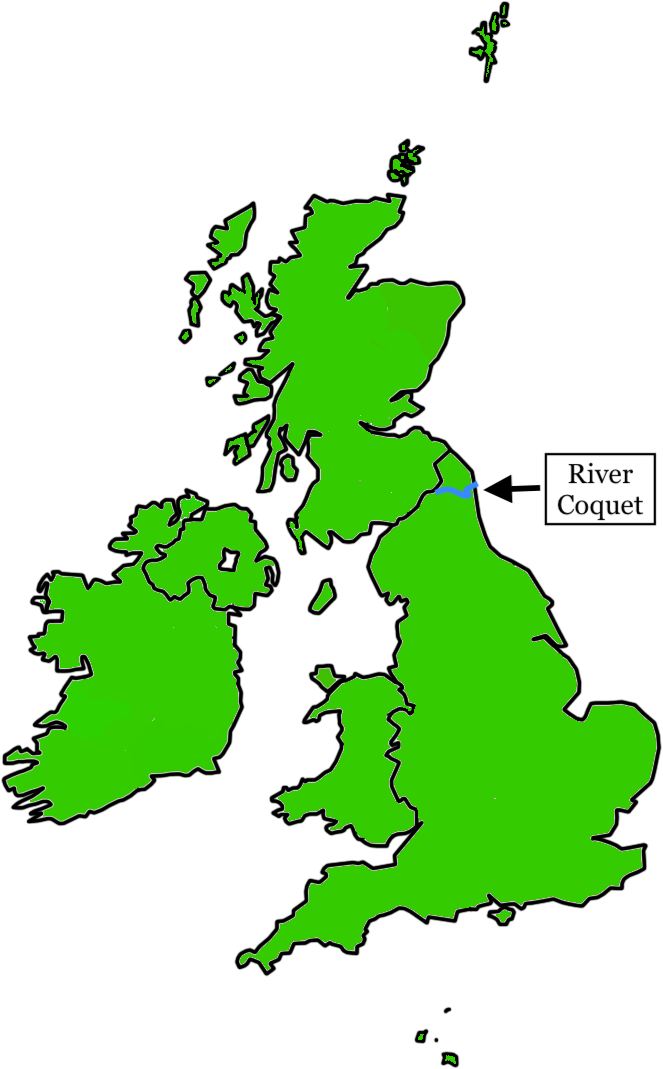
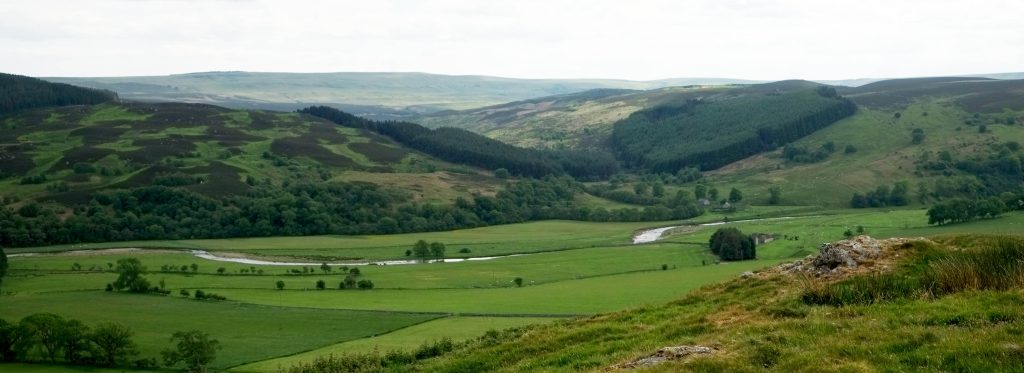
One of Northumberland’s most attractive rivers is the Coquet, which rises in the Cheviot Hills and flows about forty miles to the North Sea at Amble. The name Coquet looks French, but along with many river-names it arose long before French was used in England, and has a long and winding history, rather like the course of the river itself.
The Red One
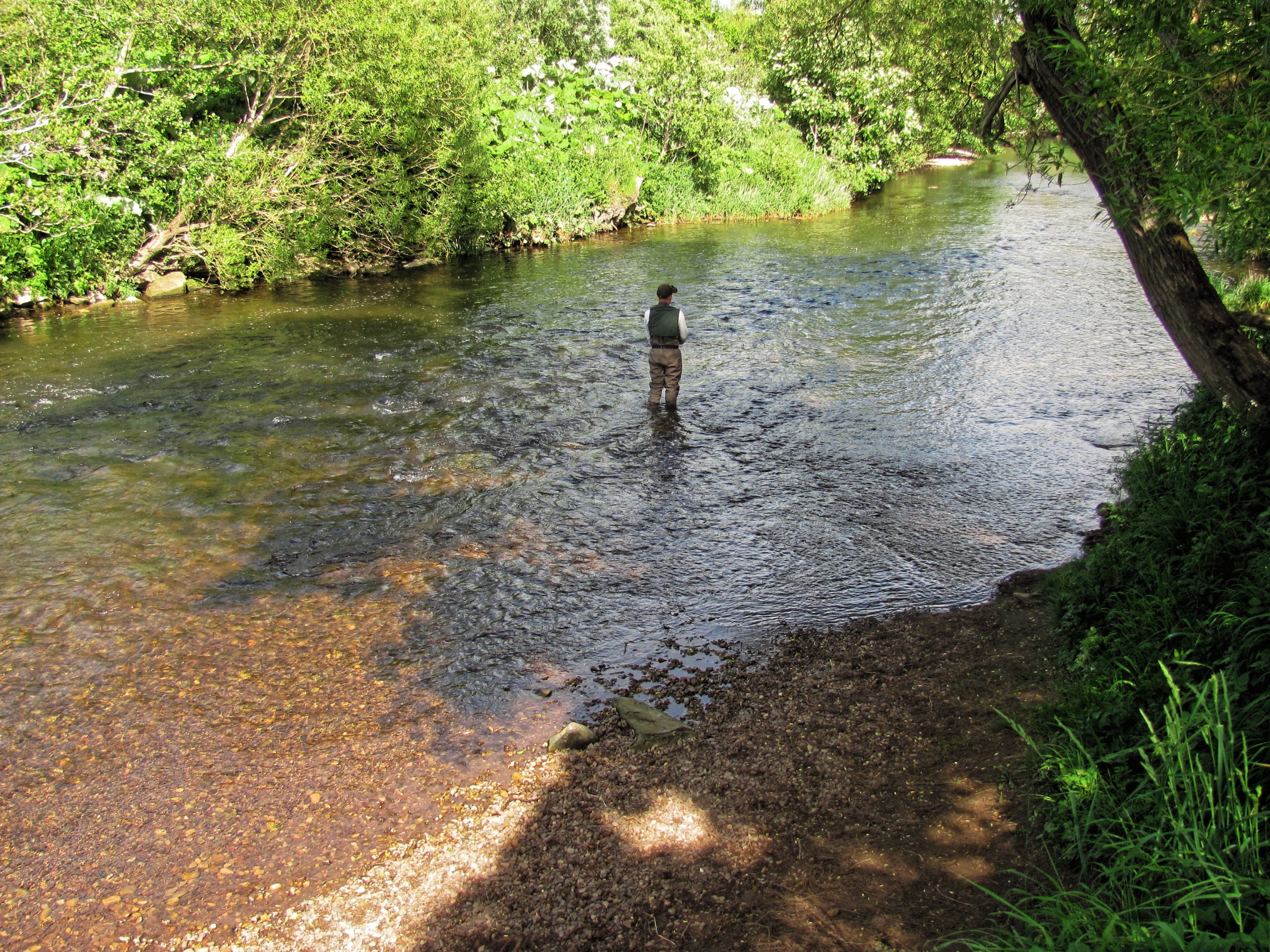
The name is pre-English and probably contains the Brittonic (Celtic) word cocc ‘red’, an older relative of modern Welsh coch. The ending is thought likely to be wedd, meaning ‘appearance’ and as Richard Coates notes, the name Coquet is a great rarity: a pre-English river-name containing two roots. The geology of Upper Coquetdale is rich in a pink-coloured porphyrite, and the river flows through reddish-brown rocks and soil for much of its lower course. The water has that colour especially at times of flood.
This interpretation is based especially on the evidence of a handful of early sources, beginning with the Ravenna Cosmography, a list of places in the world as known in the seventh century. Treating the place as both a river and an important settlement (Latin civitas), the Ravenna Cosmography offers a perplexing range of spellings, but they generally point to a form Cocuueda, and this is the form found in one of the most reliable manuscripts (‘B’). The second -u- in Cocuueda (which could be read as Cocuneda) would have a sound like English ‘w’. This would be matched in two works produced closer to home in Northumbria in the early eighth century. The Lives of St Cuthbert refer to the river as Cocuedi and to Coquet Island, just off the coast at Amble, as Cocwædesæ (adding a version of Old English ēg ‘island’). Fuller details of spellings are given below.