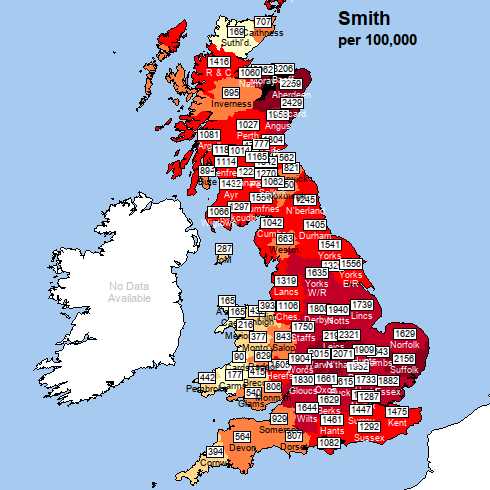
Smith has the distinction of being the most common family name in Britain. 421,703 individuals are recorded with this name in the 1881 census. They occur as frequently in Scotland as in England, with NE Scotland and the English Midlands having the heaviest concentrations per 100,000 people, as shown in Steve Archer’s British 19th Century Surname Atlas, where the coding, light to dark, indicates increasing numbers.
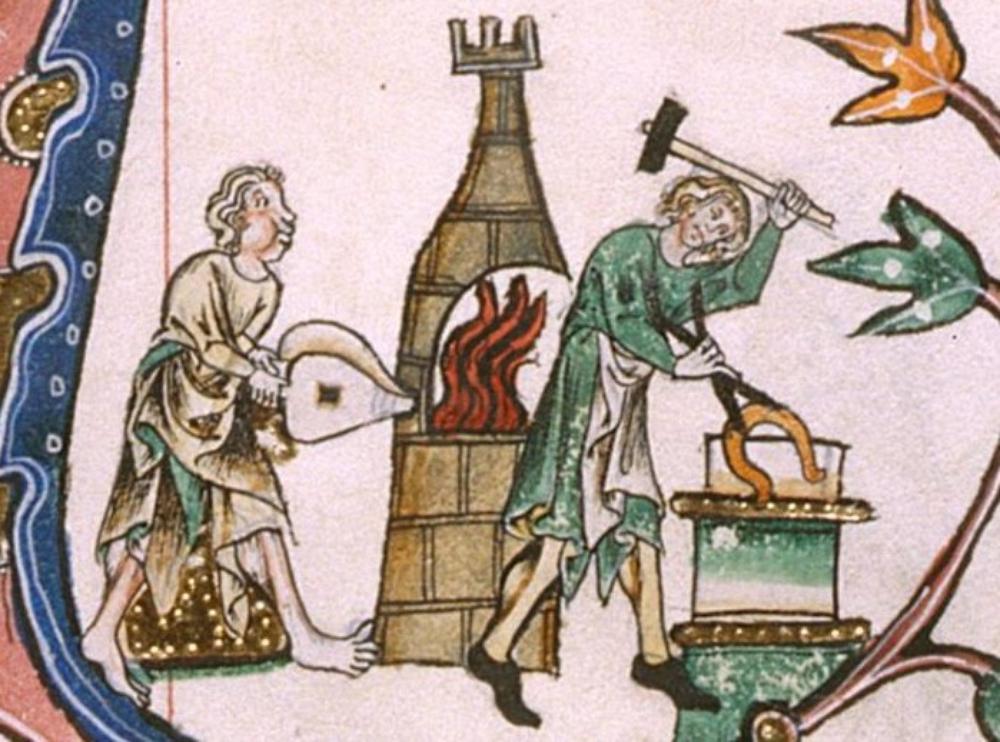
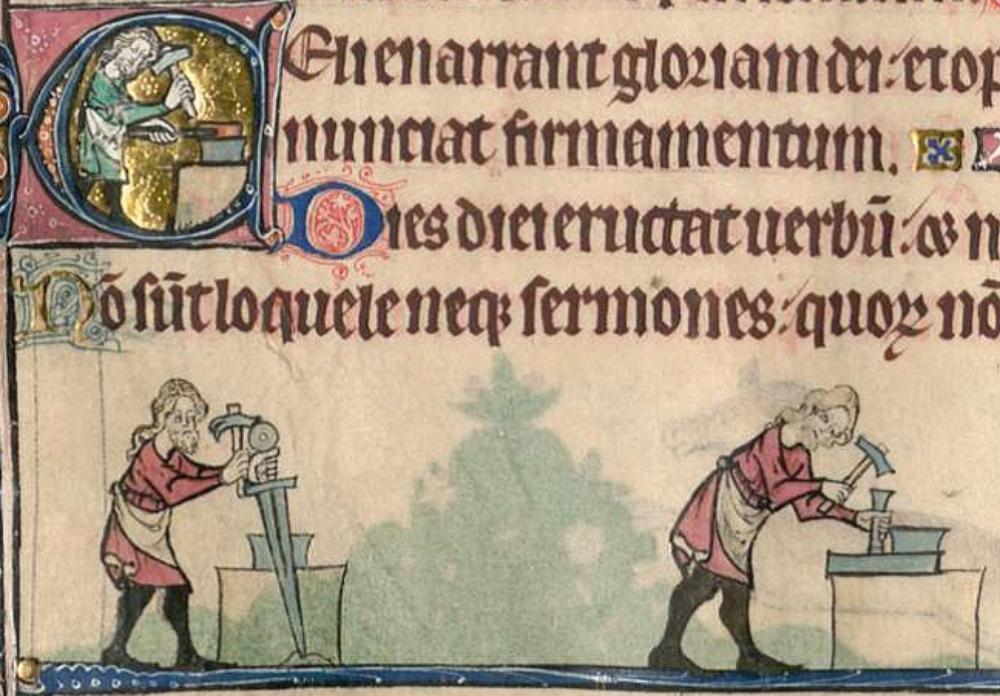
The simple reason for this is that every self-reliant community in pre-industrial Britain needed at least one smith to provide the basic iron equipment for daily living and farming. From the lord of the manor to the humblest peasant a good blacksmith was a man to be grateful to, admired and perhaps wary of. His fuel was charcoal and the work required exceptional strength and a tolerance of intense heat, smoke and physical injury.
Village smiths were blacksmiths, forging the business ends of hammers, tongs, knives, daggers, axes, scythes, ploughshares, harrows, rakes, spades and pitchforks; the griddles and grates of fireplaces; pots, pans and kettles; nails, pins, bolts, bars, locks, hinges and brackets; chains, wheel rims and cart-fixings. They were also farriers, making and fitting horseshoes, a service discriminatingly prized by the horse-riding gentry, clergy and merchants.