Hamilton part 2: the spread of the family name
Hamiltons in Ireland
The next chapter in the Hamilton story is the 17th-century colonisation or planting of Ulster. Already by 1606 James Hamilton (son of a clergyman in Dunlop, Ayrshire), had acquired some of the O’Neill lands in county Down. He was subsequently ennobled as Viscount Claneboye. But the main migration of Hamiltons to Ireland occurred after 1609, when, in order to anglicise and control the native Irish, King James I of England and VI of Scotland initiated the Plantations of Ulster. Lands were granted to ‘undertakers’, men who undertook to hold crown lands there. By this means another, more eminent James Hamilton, 1st Earl of Abercorn, and his brothers Sir Claud Hamilton (of Shawfield) and Sir George Hamilton received large grants of land in county Tyrone in 1610–11. Estates were given to other members of the Hamilton clan in counties Cavan, Armagh and Fermanagh.
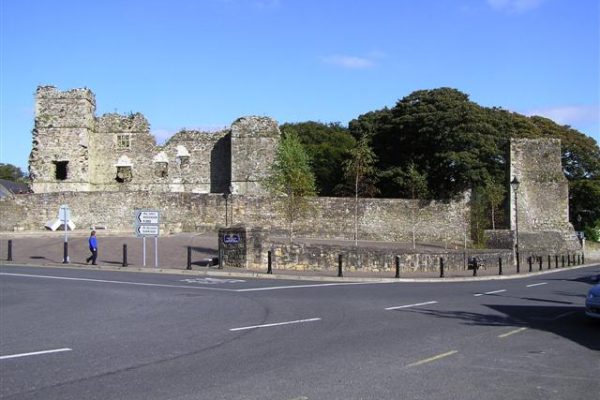
New place-names declared new ownership. In 1610, in Ulster, Sir Alexander Hamilton of Innerwick, a descendant of Walter Fitz Gilbert, was granted 2,000 acres in county Cavan, where he built a castle named Castle Hamilton. In 1614 Hamiltonsbawn in Armagh was named after John Hamilton, brother of James, Viscount Claneboye. Bawn means ‘a defensive courtyard’ and is an anglicized form of Irish bábhún. A descendant of John, Alexander Hamilton, gave his name to Newtownhamilton (Armagh). In 1620 the Scottish soldier Sir Frederick Hamilton, a brother of Sir Claud Hamilton of Shawfield, acquired extensive lands in Leitrim, where he built a castle named Manorhamilton.
Not all Hamiltons in Ireland descend from the Scottish planters. Anglicisation of the native Irish took various forms, one of which was the adoption of a similar sounding English or Scots surname in place of an Irish surname. Definite proof is hard to come by, but it is likely that in the northern counties Hamilton was sometimes adopted for Irish Ó hÁdhmaill (‘descendant of Ádhmall’, already partly anglicized as Hamill) and in southern counties for Irish Ó hUrmholtaigh (‘descendant of Urmoltac or Turmoltac’).
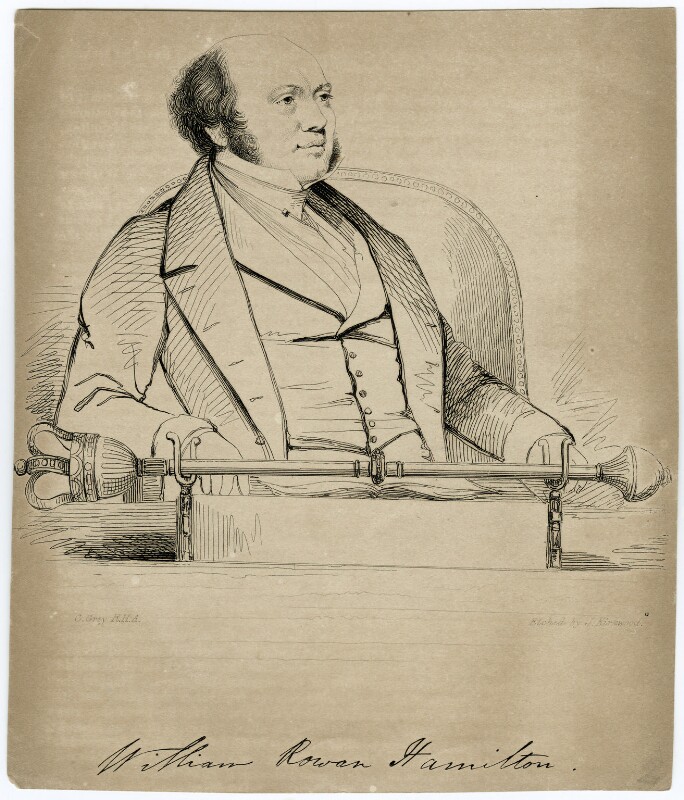
In the scientific world, the most famous bearer of the surname is the great Irish mathematician, Sir William Rowan Hamilton of Dublin (1805–1865), inventor of algebraic quaternions and of the ‘Hamiltonian function’, which led to the development of quantum mechanics. Whether his family on his father’s side was of native Irish or of Scottish origin has long been disputed, although the available evidence favours the latter.
Hamiltons in the Caribbean and America
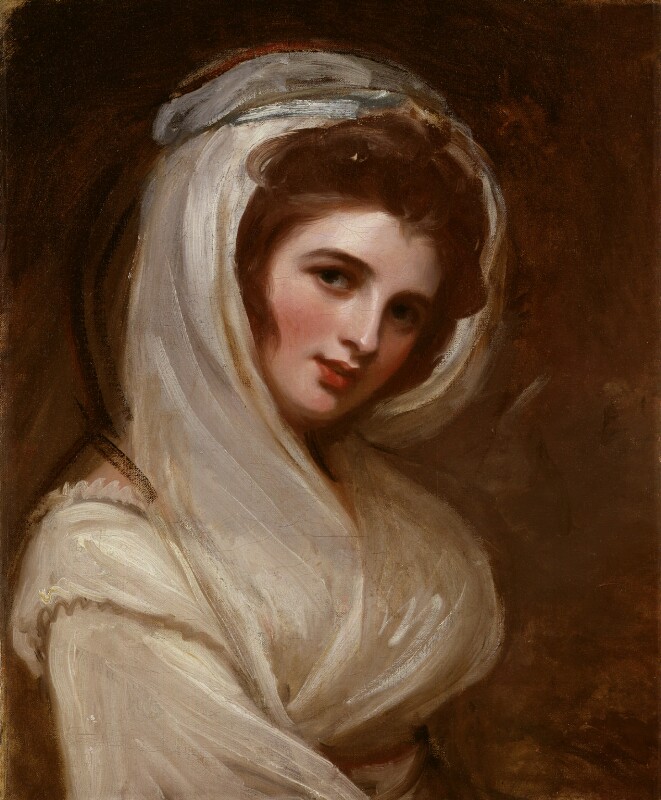
Scottish Hamiltons played major roles in British government, including the administration of its colonies. Among them was Lord Archibald Hamilton, grandson of the 1st Duke of Hamilton and governor of Jamaica. His son, Sir William Hamilton, soldier, diplomat and archaeologist, is chiefly remembered for the fact that his serially promiscuous wife, Lady Emma Hamilton (c. 1765–1815), became the mistress of Admiral Horatio Nelson. She is pictured here by George Romney in c.1785.
During the 18th century other Hamiltons ventured to the Caribbean to take advantage of the lucrative trade in sugar. John Hamilton, son of a Glasgow architect, was a planter and slave owner on the Island of Tobago. James Hamilton, son of Laird Alexander Hamilton of Grange in Stevens(t)on, Ayrshire, became a slave owner on St Kitts and then Grenada.
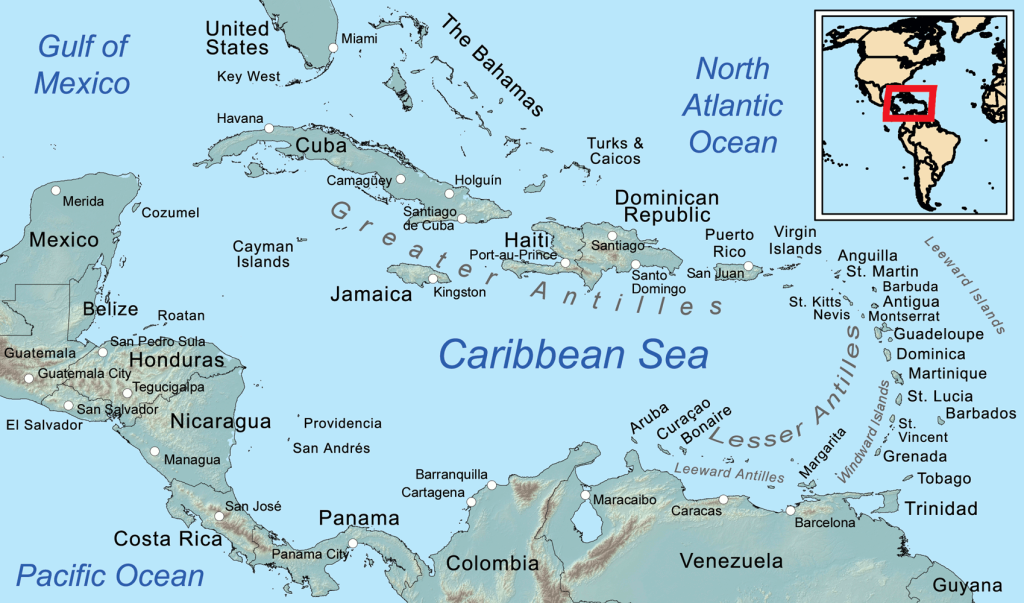

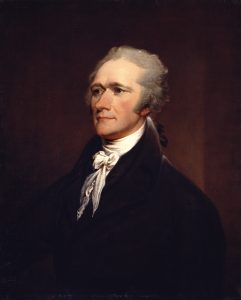
James’s son Alexander Hamilton (1755–1804), who migrated to New York in 1772, was one of the founding fathers of the United States, becoming the first US Secretary of the Treasury and supporting abolition of the slave trade. A gifted but impulsive man, he died from a pistol wound in a duel with his arch political enemy Aaron Burr. His life is celebrated in the hugely popular musical ‘Hamilton’, premiered in 2015.
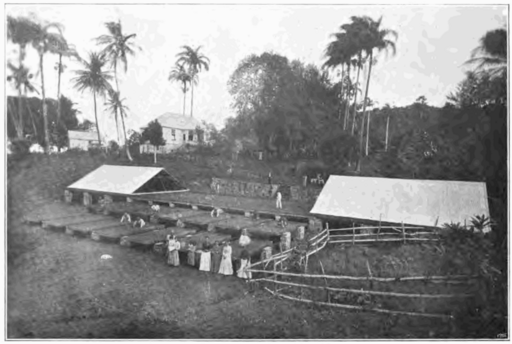
A relative of Alexander Hamilton, Dr Robert Hamilton, owned two sugar plantations in Grenada, including the Samaritan Estate, pictured below in its later days as a cocoa plantation.
The plantations were inherited by his brother, another (Sir) Alexander Hamilton, who was handsomely compensated financially by the British Government for freeing up to 150 slaves there in 1835. According to Richard Addington, many of its formerly enslaved workers stayed on as poorly-paid labourers despite emancipation in the 1830s.


Grenada is where the British racing driver Sir Lewis Hamilton’s grandparents came from, probably bearing the surname of their ancestors’ former owner. Many of the West Indians who came to Britain after 1945 can tell a similar story. Surnames can proclaim transactional power, social prestige and ownership of property. In these cases, the properties were enslaved people, some of whose descendants in recent times have abandoned their inherited surname and chosen a new one, as a sign of true freedom.


Read about where we find the surname Hamilton today in Hamilton part 3: Where do we find Hamiltons today?.