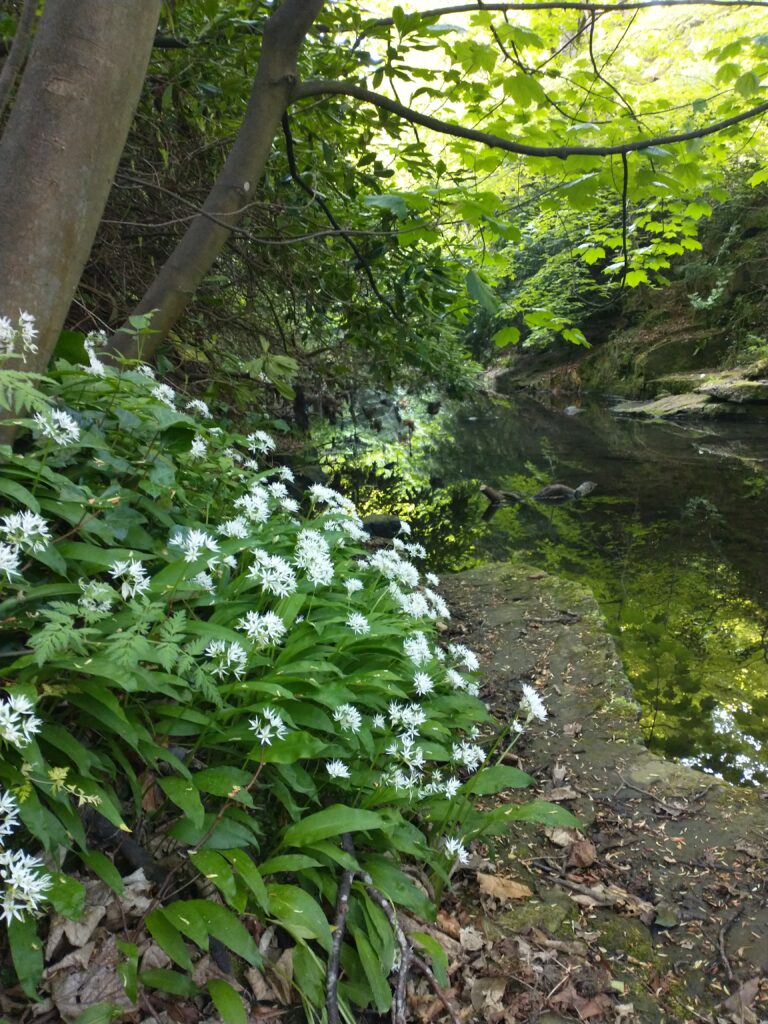
Wild garlic beyond Ireland
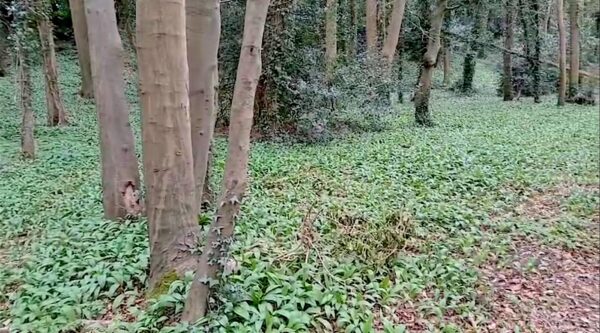
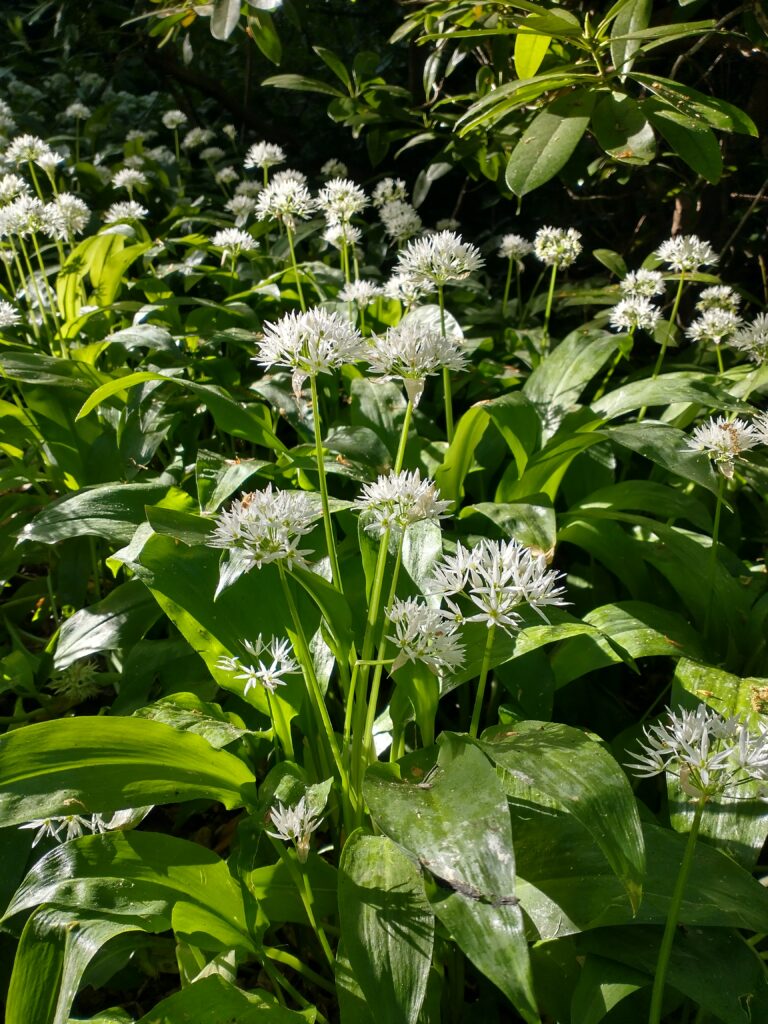
Wild garlic is also widely celebrated in other lands and languages. The word creamh found so abundantly in Irish place-names is the same in Scottish Gaelic and appears in place-names such as the stream-name Allt Creamha in Glen Lochay, Perthshire, and Creag Creamha in the Mull of Kintyre, Argyll and Bute. Its Welsh cognate is craf, and this occurs in two Breconshire names: Abercraf, where Craf is a river-name, and Dyffryn Crawnon, the valley of the Crawnon river, from craf and nant ‘stream’. In the lake-name Llyn Crafnant in Caernarfonshire, Crafnant is the nant (either ‘valley’ or ‘stream’) with wild garlic. Craf also gives its name to a whole district in England: Craven in Yorkshire, and incidentally the same root may explain the Italian name Cremona.
A more distant relative of creamh is Old English hramsa, the base for dialect words for the plant including rams, ramps and ramsons. Hramsa seems to underlie many English place-names, for instance qualifying a woodland term in Romsley in Worcestershire, and valley terms in Ramsden in Oxfordshire and Ramsbottom in Lancashire. The difficulty is, however, that the medieval spellings often leave it unsure whether the root is hramsa, ramm ‘a ram (male sheep)’, hræfn ‘raven’, or a man’s name Hræfn. Hence Ramsey in Essex is explained by Victor Watts as ‘Hræfn, raven, ram’s or wild garlic island’. More encouragingly, however, Ramsey in Cambridgeshire has a spelling of Hramesige from around 1000, and this looks like a secure case of hramsa ‘wild garlic’.
As for the word garlic, it is rare and apparently recent in place-names, although it is already present in Old English; it derives from gār ‘spear’ and lēac ‘leek’.
Text © Diana Whaley 2025