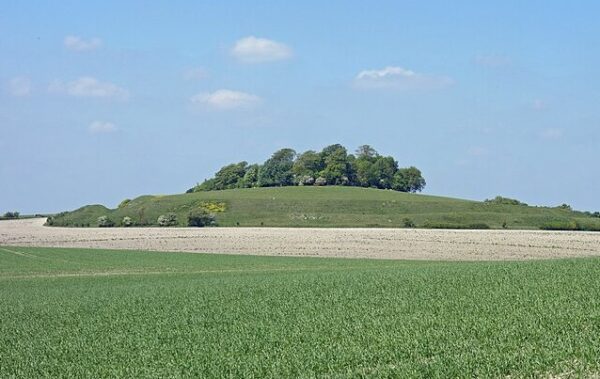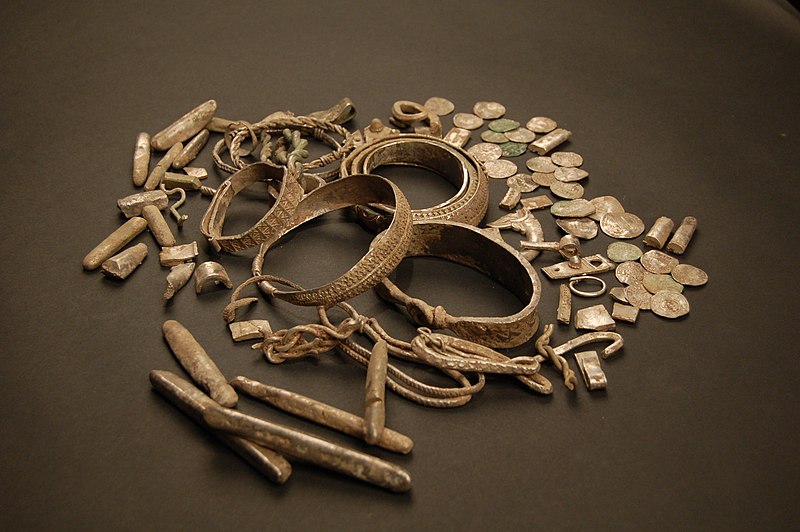
Forty-eight Dunstable jurors could not solve the mystery of Goldenlowe. It was a burial mound, like many a hlāw, and in 1290 a jury reported that Matthew Tyler found treasure there. Instead of reporting this as the law required, he kept the money, which passed to Adam Rouse. While Adam kicked his heels in jail, a second double jury overturned the verdict of the first, and finally a third unprejudiced set from outside the town found he was the victim of attempted blackmail and let him free.
Whether the claims were real or invented, people evidently associated Goldenlowe with treasure. It’s not unusual for places to be named after valuables that have been found there. At Wallasey, over the Mersey from Liverpool, some boys had run through a gap – a path down to the beach – to go swimming when one of them felt something hard under his toes. It turned out to be a golden guinea, and soon many more were uncovered. This was in 1847, and by 1859 the spot was well known as Guinea Gap. On the Northumberland coast, sands near Guile Point opposite Holy Island were called Dollar Banks after coins washed up from the wreck of a foreign ship. Mitford, also in Northumberland, has Money Banks named after a hoard of early coins discovered there.