Glaschu ~ Glasgow and Gart nan Gad ~ Garngad

As well as revealing various things about our past, place-names offer us unique opportunities to reconnect with our cultural heritage in the present. In Glasgow in west central Scotland, these opportunities include learning about the natural environment of the area through a language which was the mother tongue in the area’s communities for a significant period of time in the Middle Ages: Gaelic.

Gaelic is now a minoritized language in Scotland but it was the first language of the kingdom of Alba (later known as Scotland within an English-speaking context) from the time of its formation around the year 900. We cannot tell exactly when Gaelic became the predominant language in the Glasgow area but place-names provide incontrovertible evidence that this happened. When Glasgow’s place-names first begin to be recorded in numbers in our historical sources from the twelfth century onwards, many of the names are of Gaelic origin. These names could not have become established without a significant number of local people speaking Gaelic for a significant period of time. The number of Gaelic-speakers in Glasgow has ebbed and flowed since but, in short, the story of Gaelic in Glasgow goes back around 1,000 years.
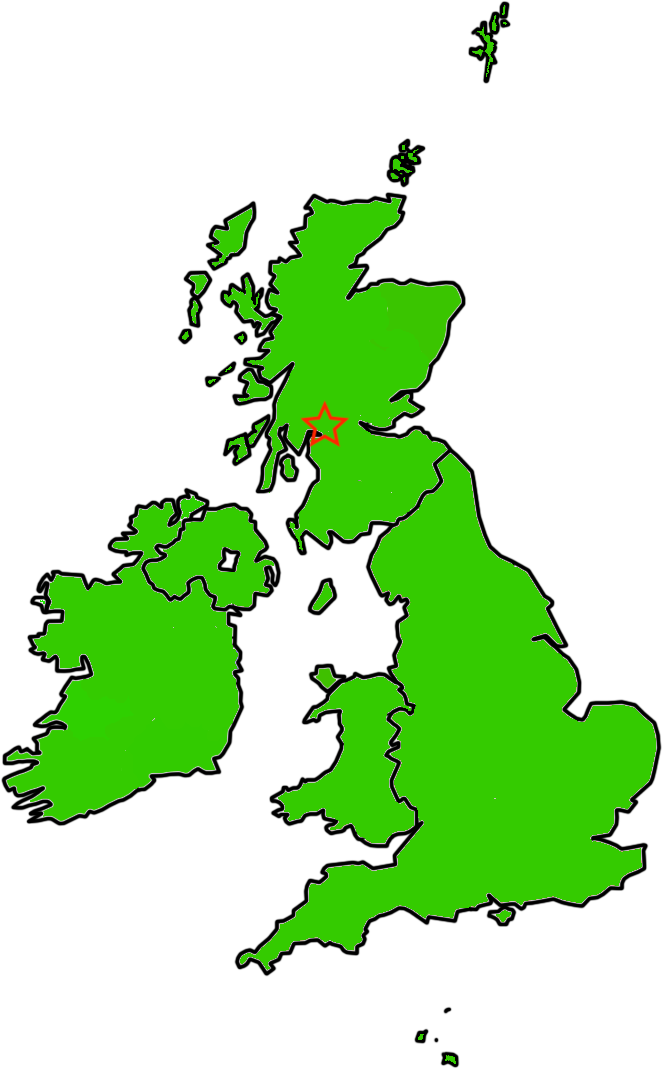
map showing Glasgow marked in central west Scotland
Location of Glasgow and Garngad

By learning about the precise application of the elements of these Gaelic place-names (as well as place-names of Northern Brittonic, Old Norse and Scots origin in the area), we can not only increase our understanding of Gaelic as it was spoken by local people in the past but increase our understanding of the way in which these people saw and used their natural environment. Engaging with this very localized cultural heritage can enrich our lives. The cultural heritage within place-names provides us with unique opportunities to gain new perspectives on the importance of living sustainably with our environment and inform better use and management of land in the present and in the future.

Let’s look at an example from the Glasgow area. The Gaelic word gad is found in the place-name Garngad, the name of an area in the east end of the city. The name of this area is usually recorded as Royston on modern maps of Glasgow but Garngad is still used locally, usually in the form The Garngad. This name is first recorded as Gardyngad in the year 1447 and is from Gaelic Gart nan Gad meaning ‘enclosure or farm of the wooden rods’. We know from medieval texts that the related Old Gaelic word gat was used of withies (the flexible, durable branches of the willow tree), as well as of halters and fastenings made from these branches when twisted together. The related modern Gaelic word gad has come to refer not only to branches of willow but to branches of birch and heather twisted together and used in the same way. These rods were widely used in fishing and farming. The place-name Garngad is very likely to reflect the fact that this place was associated by Gaelic-speakers with the raw materials with which they made these rods.

Another indication of the profound relationship that Gaels had with their natural environment comes in the form of idioms and sayings. Natural resources like withies were the obvious images to turn to when describing situations vividly and creatively. We see this throughout Gaelic culture in sayings, stories and songs. For example, one way of expressing ‘as tough as old boots’ in Gaelic involves the word gad that we find in the place-name Garngad: cho righinn ri gad seilich literally means ‘as tough as a rod of willow’ .

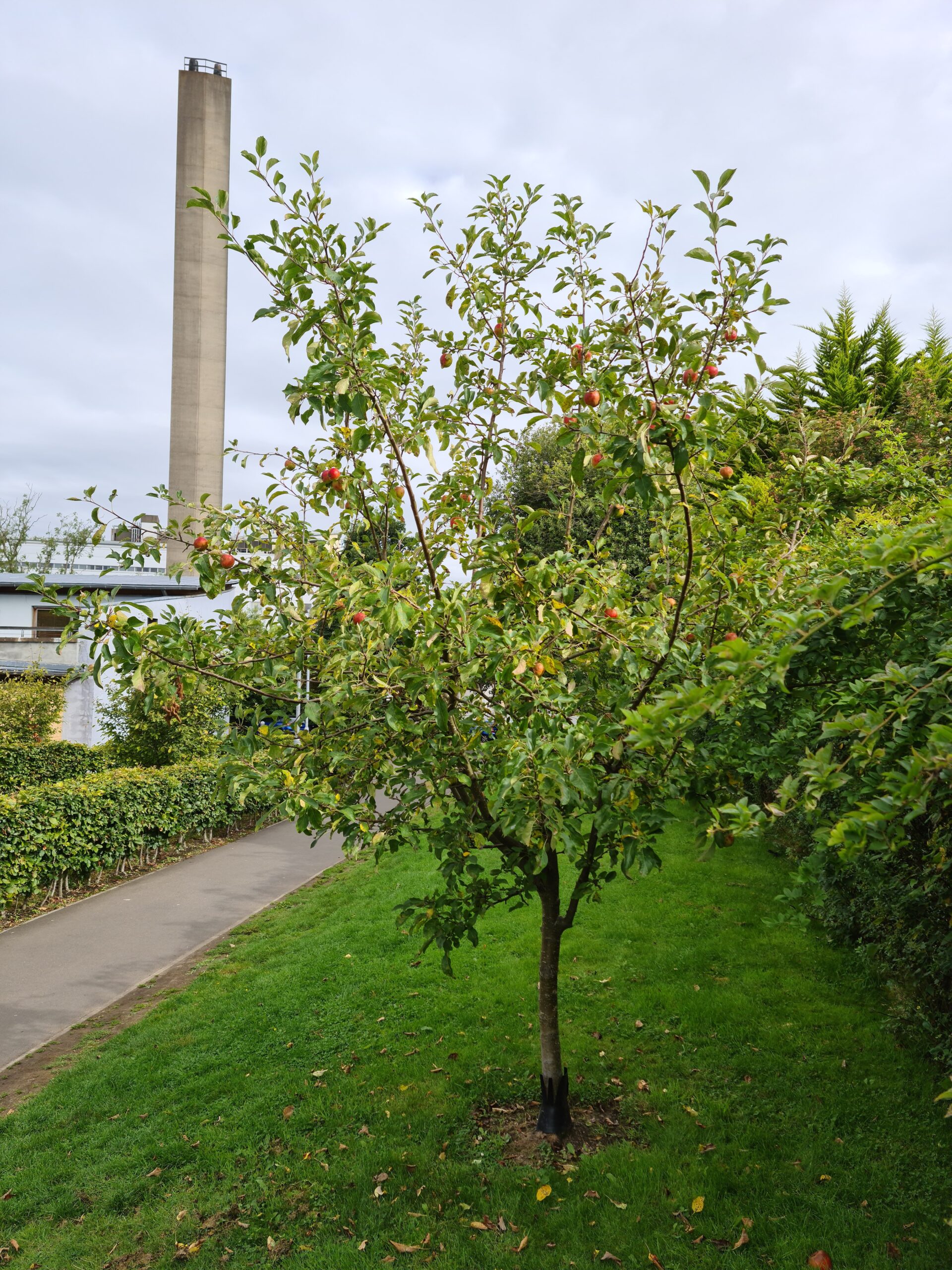
an apple tree growing by a path with a modern tower in the background
An apple tree near the hospital in Gart an Abhaill ~ Gartnavel. This Glasgow place-name shares its first element with Gart nan Gad ~ Garngad and means 'enclosure or farm of the apple tree or orchard'.
Photo © Alasdair C. Whyte
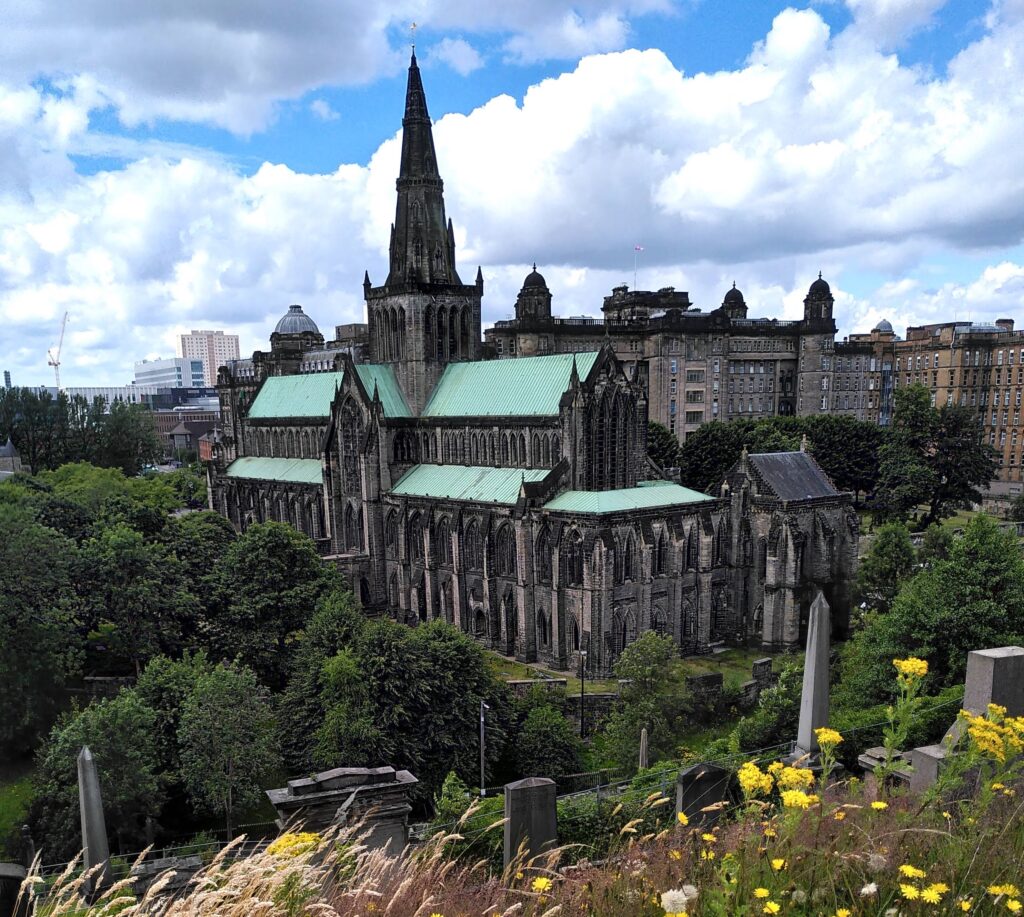
Glasgow cathedral seen from an adjoining hillside. There is a hollow between the cathedral and the hillside
Glasgow Cathedral from the nearby Necropolis. The hollow between the two lies behind the place-name Glasgow. It is from the Northern Brittonic words glas 'green' and ceu 'hollow'.
Photo © Katherine Forsyth

And what of the name Glasgow itself? It has an established Gaelic form, Glaschu, but this is in fact an adaptation of an older name of Northern Brittonic origin. Its elements are glas ‘green’ and ceu ‘hollow’, and the name means ‘green hollow’, referring to the area near Glasgow Cathedral where the Molendinar Burn flows through a deep, natural hollow. The Northern Brittonic word glas has a related word in Gaelic: glas. Like the Northern Brittonic word, this Gaelic word is also used in numerous place-names referring to the kind of lush-green vegetation to which its related Northern Brittonic word referred in the name Glasgow. Given this close relationship between Northern Brittonic and Gaelic, it is easy to see how Northern Brittonic place-names were adopted and adapted by Gaelic-speakers during the period in which Gaelic became the main community language in this part of what is now Scotland.

As well as empowering us with the  knowledge that multilingualism and multiculturalism are as much a part of our past as they are of our present, place-names have an important role to play as we face the challenge of renewing our relationship with our natural environment and living more sustainably.

Further reading

For more on Glasgow place-names, see Alasdair C. Whyte, with Katherine Forsyth and Simon Taylor, Glasgow’s Gaelic Place-Names (Birlinn, 2023).

© Alasdair C. Whyte 2024